The order in which I assembled my Ponton
Pre-requisites
The list assumes that the painted chassis is already standing on its wheels and that the headliner, and an eventual Webasto sunroof, is installed. It also assumes the painted door shells are in place, but not finally adjusted and that fenders, hood and trunk lid (also painted) are not mounted since you want good access everywhere, from all angles. You don’t want to risk damaging anything during the assembly work.
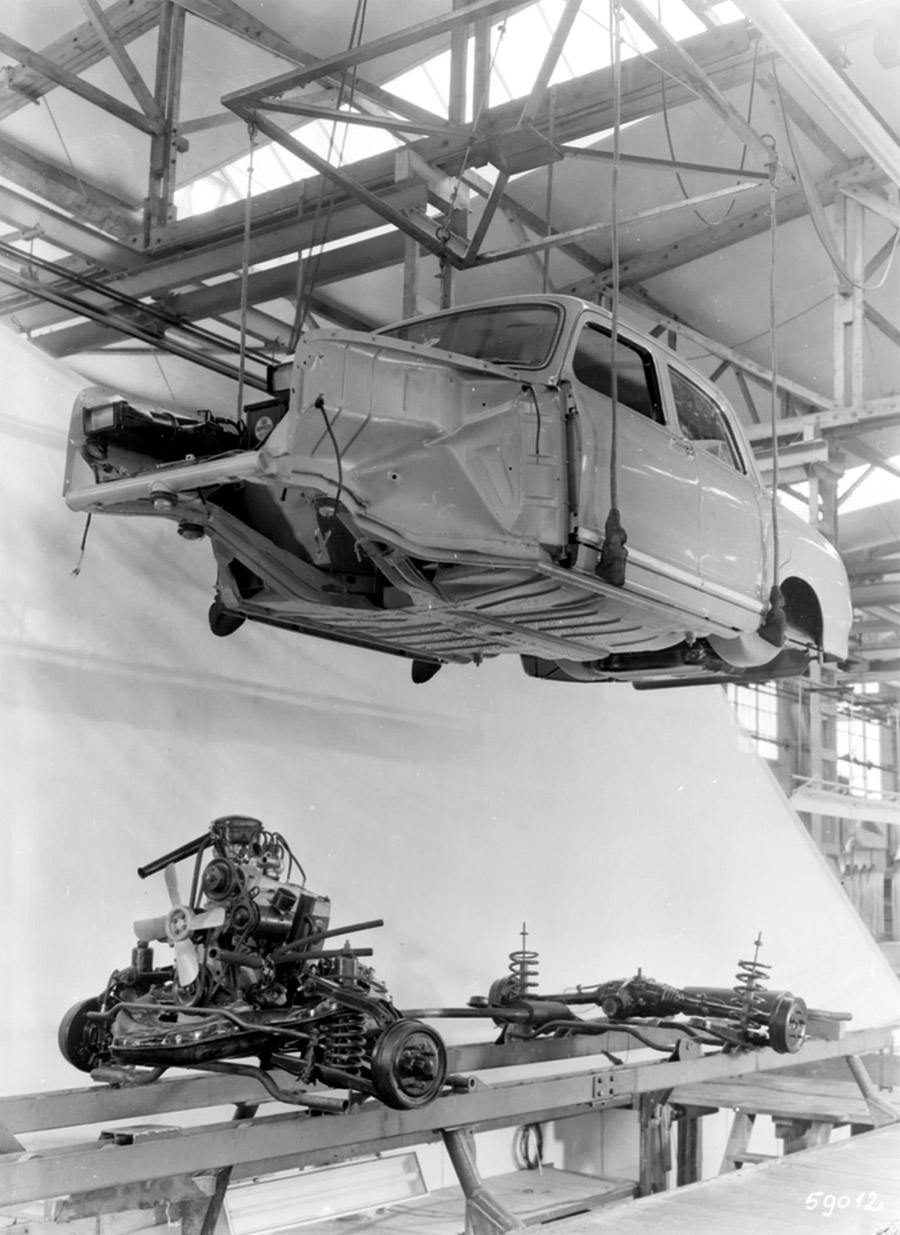
Marriage of a W120 chassis to its body, 1953, © Daimler AG
It can also be noted that I waited as long as possible to install the windshield since that will block a very neat way to access things on both sides of the firewall. But do assemble it before you mount the hood. The rear window you can install much earlier in the process. If you install seatbelts in the rear, in the way I did it, wait until at least the retractors are in place on the parcel shelf until you install the rear window. If you want to have a rear speaker on the parcel shelf, install that before the window as well.
Rust-protect all cavities before the assembly or do it as you proceed as I did, protecting all the “small” beams, pockets etc around trunk, interior and engine bay where you will have problems getting access later. Protect the larger cavities together with undercoating when the car is finished/drivable (see Rust protection).
More assembly experiences can be found in the different sub-articles.
Order of the assembly
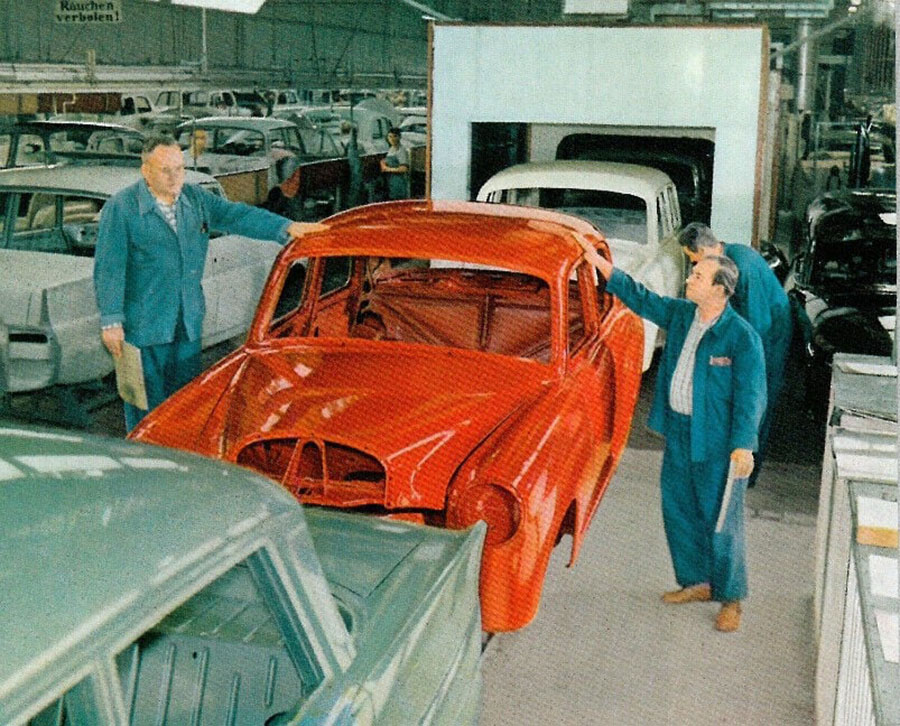
A W120/W121 has come out of the last hardening in the painting line at Sindelfingen. The color indicates that it is a Ponton for the fire department. I have a few more photos about this, but that will be another time, © Daimler AG
It takes some planning to assemble a car after it has been completely disassembled. You don’t want to fasten something that five steps later will block something else. The following list I created before my work began and then kept it updated based on my experiences. It’s rough and not 100% complete, you can for sure assemble many parts in a different order. The order can differ depending on how you wish to do it, to what extent you have taken your car apart, what state it’s currently in and your Ponton model. Some steps can be moved one or two lines up or down, some [much] more. Anyway, the list worked for me. Please let me know if you have any suggestions or comments on the list.
1. Gas pedal shaft, the part of the pedal mechanism that’s behind the engine
2. Brake pedal (but not yet the arm itself)
3. Main brake cylinder
4. Clutch pedal and flange with silent blocks (but not yet the arm)
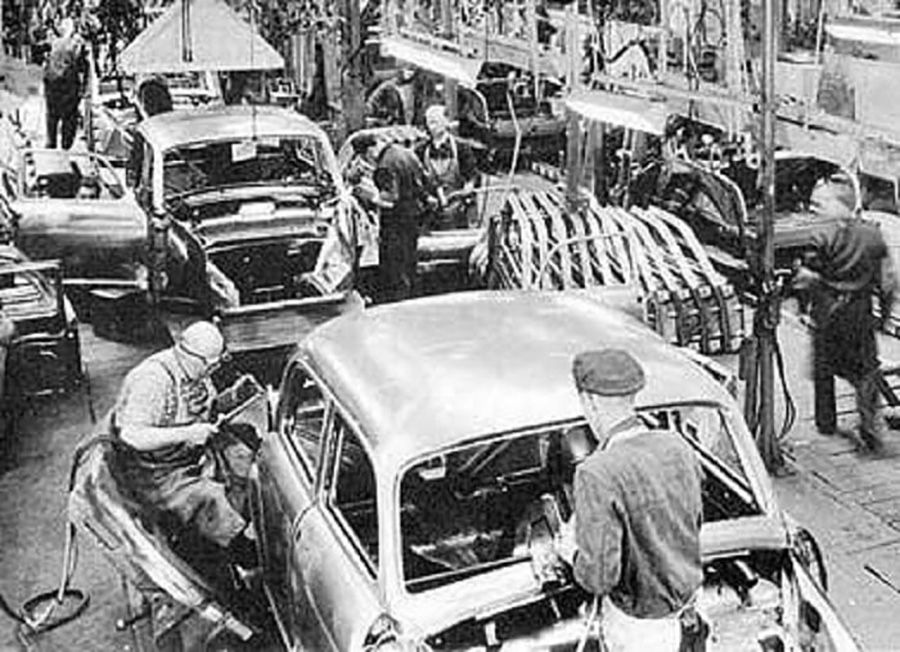
The assembly line for Pontons in Sindelfingen, © Daimler AG
5. Brake and fuel pipes. You want to do this early in the process when the engine bay is empty (especially if you’re to adjust/bend the pipes). In order to be able to ensure proper rust protection for the brackets and their holes through the floor you don’t want the interior in the way.
a. Do not mount the underpan before brake system is tight and you have rust protected the beams via the holes covered by it!
b. You can install wheel cylinders and front brake shoes now, or later. The rear brake shoes must wait until you have the parking brake mechanism in place.
c. For the necessary fuel pipe adjustments, I installed the fuel tank temporarily and then removed it for later, final installation. If you install it now, don’t forget the small rubber hoses for the breather pipes that goes through the rear beam before you connect the fuel pipe from the front.
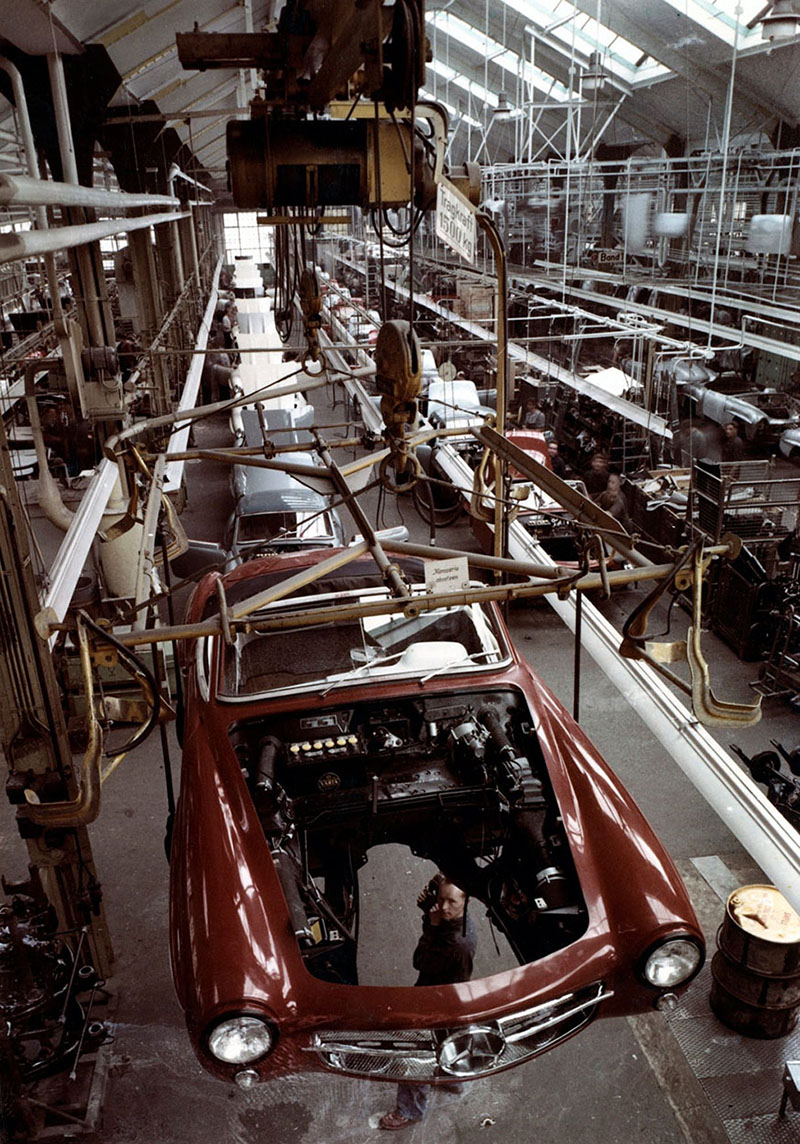
The assembly line for the 190SL in Sindelfingen, © Daimler AG
6. Now I cut and installed the first layer of my sound dampening on the front floor, Dynamat Xtreme, slightly thinner (but hopefully better) than the original “antisquek bituminous 5mm felt cardboard”. Note, in my case only for the front floor since I hadn’t finished my installation of the seat belts in the rear yet.
7. Chrome list along instrument panel, seal (e.g. Terostat butyl tape) its clips from engine bay side
8. Sound dampening on both sides of the instrument cluster, a small one extending to the driver’s door and a long one extending to the passenger door with a recess for the clock, installed from engine bay side
9. Clips for cable harness on firewall, seal (e.g. Terostat butyl tape) them
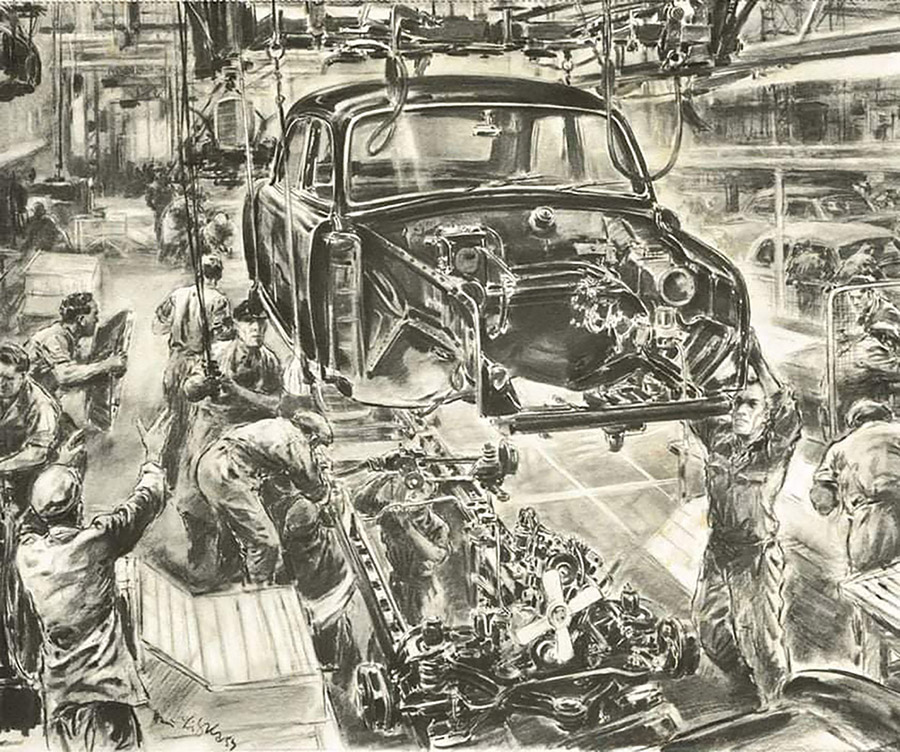
How Hans Liska drew the Ponton assembly line in Werk Sindelfingen, © Daimler AG
10. Ring nozzles/air intakes on instrument panel and air intake under instrument panel/ glove compartment floor
11. Sound dampening inside glove compartment
12. Middle wall in glove compartment
13. Main and rear cable harness, connect them
14. Sound dampening under glove compartment floor (Note the M6x65 screws which hold the ventilation channels outer, lower brackets accessible!)
15. Main light switch (Job number 82-15)
16. Switches for parking lights (Job number 82-16)
17. Switch for ventilation fan (Job number 82-17)
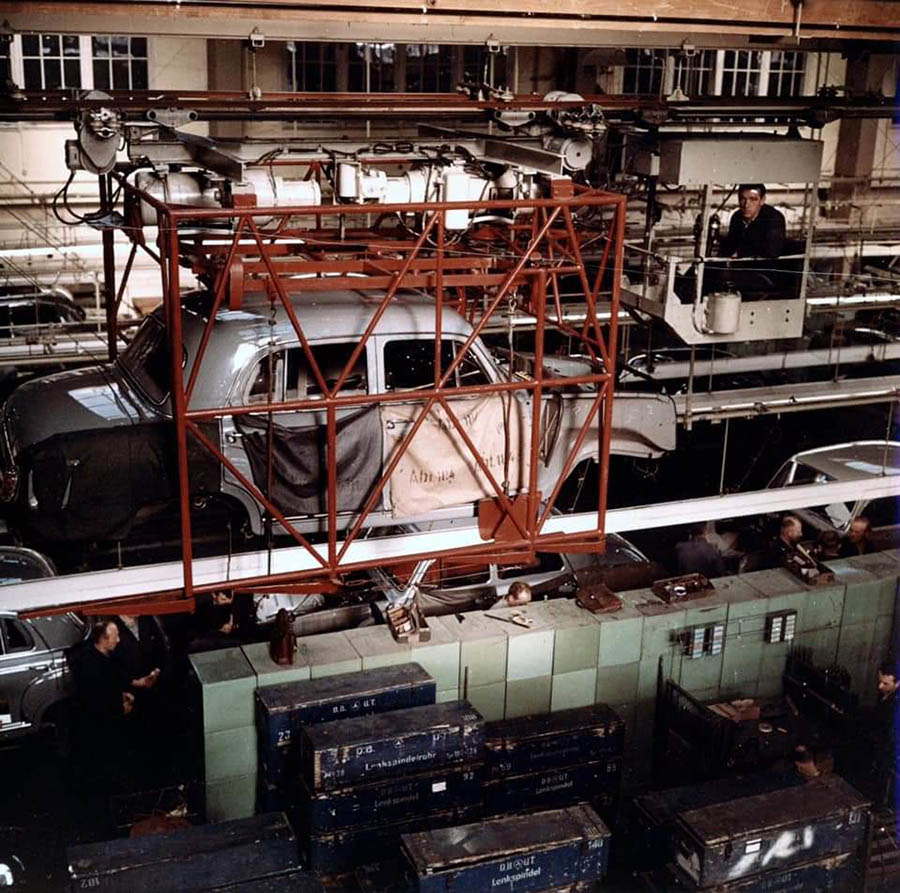
A W180 Mercedes-Benz Ponton 220a, S or SE, © Daimler AG
18. Interior/dome light
19. Steering lock and adjust its height with washers
20. Combi instrument and clock as well as instrument panel and connect the different switches as you go from here
21. Windscreen wiper and similar incl hose for windscreen washer nozzles, test them (instead of the windscreen, substitute it with piece of plastic)
22. Hood locking mechanism incl wire
23. Test assembly and adjustment of sound dampening firewall on engine bay side (Note, don’t make the final assembly until everything behind it is in place, like the ventilation’s nozzles, springs and hoses, cables, pipes, grommets, blind lids etc and that all chrome and cable clips are sealed with e.g. Terostat butyl tape):
a. Left
b. Right
c. Middle, lower
d. Middle, upper
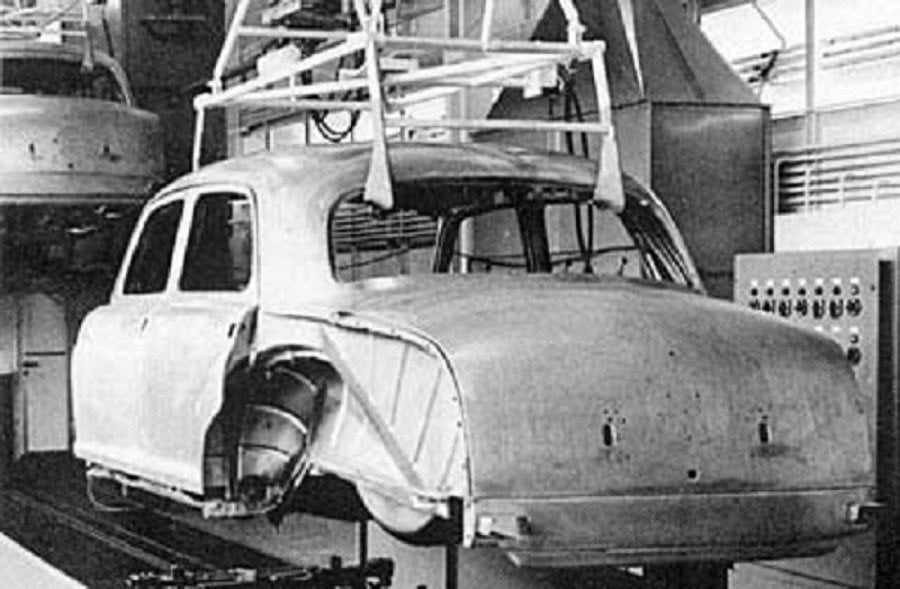
Another shot of a Mercedes Ponton in Stuttgart assembly line, © Daimler AG
24. Ventilation mechanism and covers (group 83)
25. Gas-, brake and clutch pedal arms. I decided to install them rather late in the process so that they were not in the way during the installation of the different parts of the interior incl sound dampening
26. Water pipes for heat exchangers (difficult/impossible to mount when brake booster and engine are in place but be aware that it’s easy to damage them during the engine installation!)
27. Dividing wall for brake booster in engine bay. You may have to move it a bit when engine is installed if that is done from above (I may have missed something here, my memory fails me, maybe you can wait with this step after the engine is installed)
32. Engine, clutch and gearbox
33. Steering wheel, also at a “late” stage so that it isn’t in the way while detailing the interior
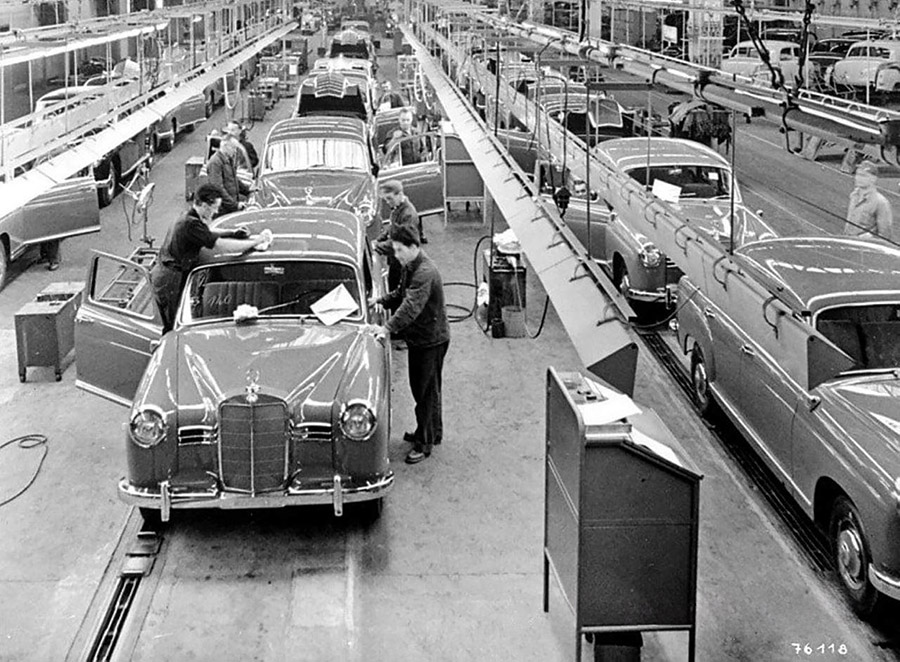
Final adjustment on Ponton 4-cylinder model, © Daimler AG
34. Clutch and gear shift mechanism and adjust them accordingly
35. Other dividing walls in engine bay
36. Connect oil pressure, speedometer wire, ignition adjustment etc to the instrument panel, which is done from the engine bay side
37. Attach all electrical wiring to engine
38. Parking brake (especially the wire that goes in the propeller shaft tunnel)
39. Propeller shaft
40. Fuel tank and its small hoses for the breather pipes that goes through the rear beam (rather tricky to get in place and secure with the original hose clamp) and after that the other pipes incl the one that goes forward to filter. Check that there are no leakages.
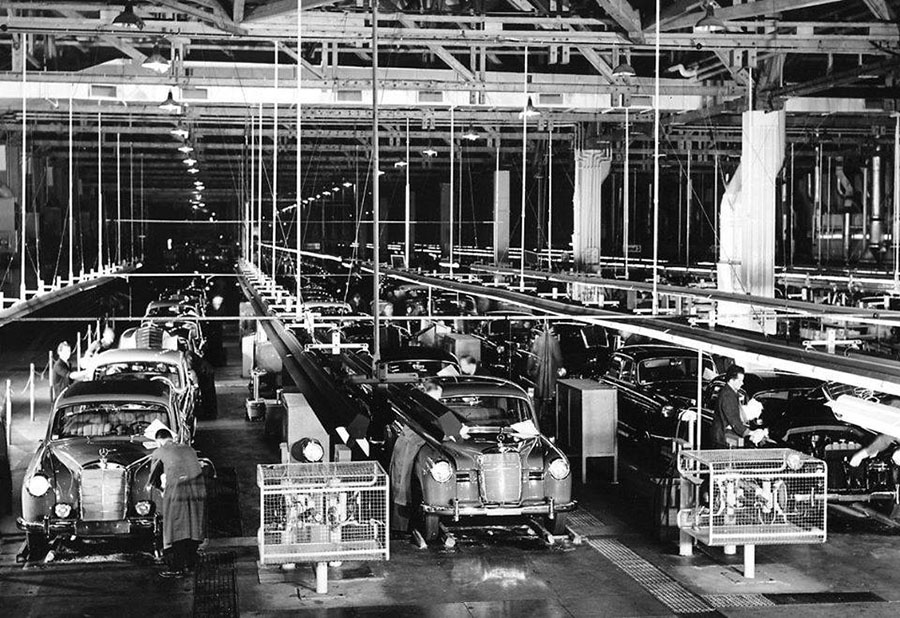
Final check of a Ponton 6-cylinder to the left, and 4-cylinder vehicles in the middle and right lanes, © Daimler AG
41. Exhaust system
42. Brake fluid pipes to brake booster
43. Radiator and heat exchangers and connect everything
44. Ash tray
45. Radio and glove compartment lid
46. Make a temporary installation of any seat belts since you'll have problems doing any alteration later during the assembly
47. Verify that you have done as much of the rust protection as you can, at least in areas where you will have problems getting access to at a later stage
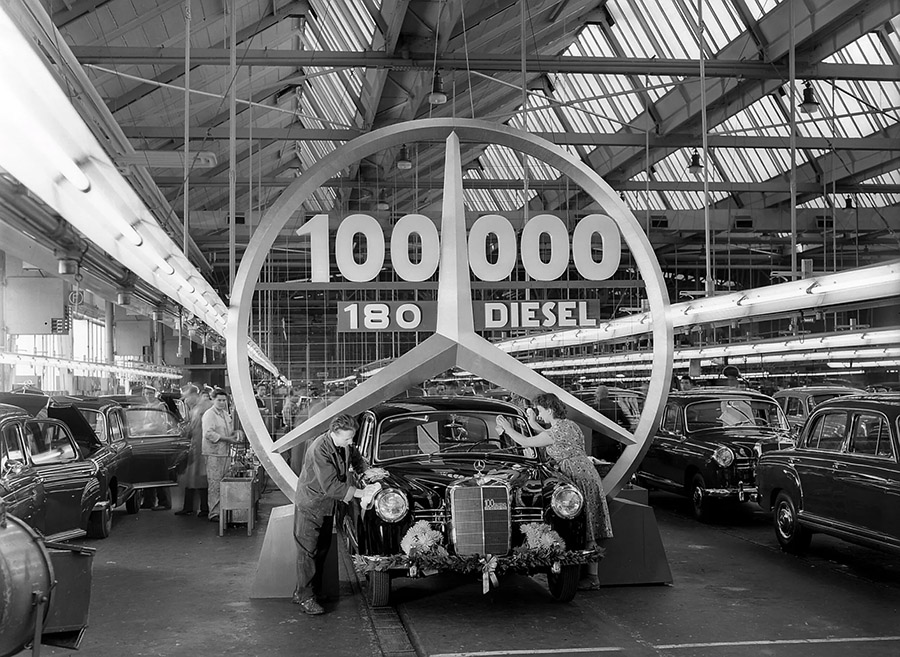
The 100.000th 180D Ponton produced, 1958, © Daimler AG
48. Then I cut and installed the first layer of sound dampening for the rear floor; Dynamat Xtreme, slightly thinner (but hopefully better) than the original “antisquek bituminous 5mm felt cardboard”. If I hadn’t had my late-in-the-process seat belt installation I would have done it together with the front floor above. Now I also installed sound insulation on the walls in front of the A-pillars, could have been earlier as well.
49. Front wall coverings, under the instrument panel on the inside of each A-pillar.
50. Then I added a second layer of 3mm thin Dynamat Dynaliner sound insulation in the rear, installed the wooden floor sections in the front and a 12 thick Dynamat Dynaliner sound insulation on top them, as well as above the gear box, instead of the original waffle felt. Finally, all rubber mats
51. Windscreen now when everything is in place
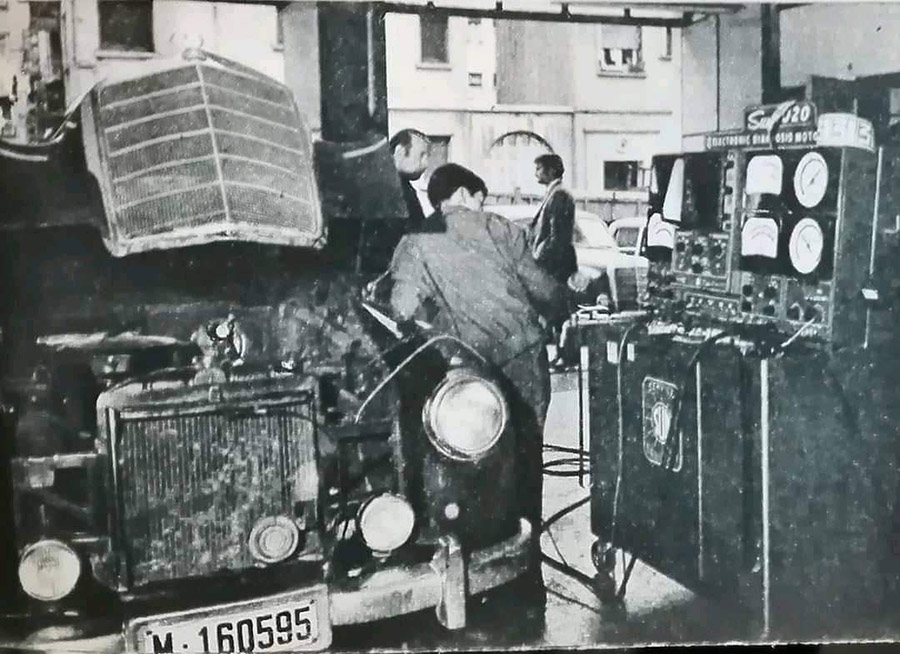
A 6-cylinder Mercedes Ponton (219, 220a or S, probably in Munich, being checked with the help of a Sun 1020 Engine Analyzer
52. Mount and/or fit/adjust
a. Entrance sills with their difficult to install sealings at the rear and the front as wel as their rubber mats
b. Doors
c. Fenders
d. Hood (after having applied sound dampening on the underside of it if applicable) and trunk lid
53. Door detailing
54. Seat belts rear
55. Interior
a. B-pillar covering
b. Seats (I did however test their installation etc earlier in the process, when I still had a more or less an empty interior)
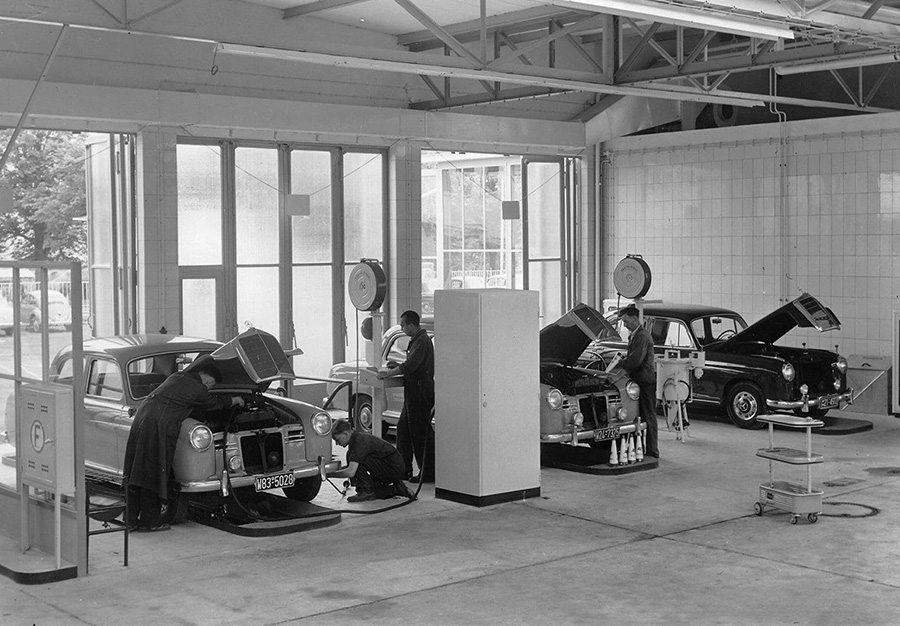
Fulda branch’s workshop in Frankfurter Straße 125. Customer service oil change station with two 180 Pontons and a 6-cylinder 220a, © Daimler AG
56. Seat belts front
57. Lamps, blinkers etc
58. Other chrome parts as applicable, like bumpers
59. Extra items:
• Insulation inside the air intakes/scopes
• Any rear speaker(s) and fading control
• Any remaining parts for the front axle
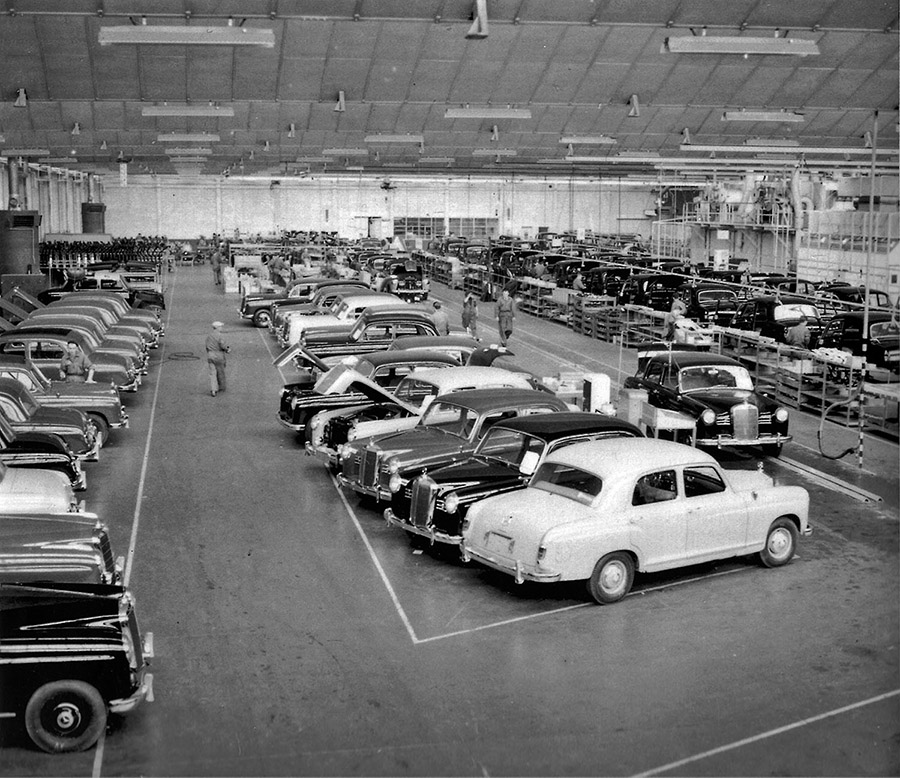
Description unknown to me, but I assume the picture shows a hall for delivery-ready Mercedes-Benz Pontons, © Daimler AG


