Wheels and wheel alignment

A Mercedes-Benz Ponton 220a on an Exacta testbed stand 1956. © Daimler AG
Wheels (40)
The correct 6.40-13” diagonal tires from Heidenau (article number 6.40-13 85P TL) compared to my SLK 350’s 18” wheels.

A slight difference in the amount of rubber between rim and road between my Ponton’s 13” and my SLK’s 18” wheels
The diagonal tires are certainly more sensitive than radial tires. But with the wheels aligned according to specification and slightly higher air pressure than recommended by the instruction, the car runs perfectly and very silent on even roads. But it’s extremely sensitive to any faults in the road.
Driving on the streets and roads in and around Stockholm is an adventure since they are worn out due to the winter tires with spikes. The two channels created in the asphalt by the spikes can be several centimeters deep. With the diagonal tires you are more less thrown out of and into these channels. Modern tires handle these channels much better.

The 219 Ponton with its new tires on. Without the hubcaps breaking up all the black, the car looks a bit odd.
The local tire shop that installed the tires and tubes, and also did the first wheel alignment, did not pay attention to the fact that the tube valves had an outer diameter of 13mm while the valve holes in the rim were 15mm. This resulted in the valves getting skewed after just a few kilometers of driving. They straightened the valves but of course they soon got skewed again. Since this shop failed with the wheel alignment I switched to another tire shop, belonging to a local MB shop.
The new shop not only did a correct wheel alignment but also informed me of the importance of fitting valve collars. Without these collars, the valve will inevitably end up skewed again, which will soon result in a flat tire. Luckily, they had a couple of those and mounted them before the wheel alignment. Since then, the air valves haven’t moved.

Valve collar to mitigate skewed 13mm valves in rims with 15mm holes.
Axle and wheel alignment (32, 33, 35, 40)
First attempt
The workshop manual "Type 190 part 2" describes how the wheel alignment is done and in the supplement “180-220SE”, as well as in the "Technical Data Manual", you can find the specifications for the different Ponton types (see article Restoration for the necessary literature and how you can get hold of it).
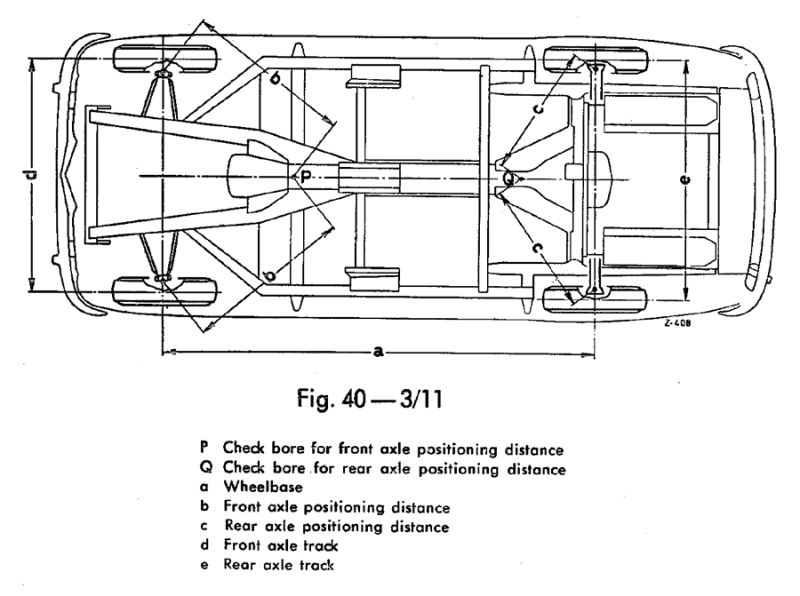
As stated elsewhere I started of with doing this at the local tire shop. Together we were able to cross-measure the wheelbase, axel position distances as well as ensure the rear axle alignment. There are special wheel alignment gauges for this, but we can assume the Ponton versions are difficult to find. Instead, we used tape measure and measuring line and a lot of double checking. After adjustment of the cross arm at the rear differential all measures came out perfect. After replacing my New Old Stock NOS shock absorbers from Boge with new from Bilstein (front 24-000024 and rear 24-000123) the rear wheel camber didn’t have to be adjusted, it was within specification. See the gallery below.



While trying to set the toe in (“Vorspur” in German) we realized the left tie rod head needed to be replaced. I ordered a new tie rod, complete with tie rod heads (180 330 11 03, number changed to 180 330 12 03), from Mercedes. However, it turned out that when I turned the steering wheel to the maximum right, the inner tie rod head on the left side, could touch the rear threaded bushing on the left side lower wishbone. The toe-in was as per specification and done with the steering in center position, pitman arm in the correct position etc etc.
It turned out that Mercedes’ new tie rod heads were sliiightly wider but above all approximately 2mm higher than my other heads. I ordered a new set from mbclassic.de and that one worked fine.

The tie rod end from Mercedes came in contact with the wishbone bushing thereby limiting free movement. Not good!
But when it came to the adjustment of camber (“Sturz” in German) and caster (“Nachlauf” in German) etc the outcome of our adjustments didn’t make any sense. The values were not stable, and the caster adjustments resulted in damaged sealing rings despite the specifications not being met.
It turned out that there measuring equipment was old and malfunctioned. So, they bought a new measuring equipment, of course not only for my needs, for 30kUSD. The new one did however not measure based on the rims but on the tires. I didn’t feel comfortable with that, and I saw that they had issues with applying the sensors and the values kept being unstable.

First attempt to align the wheels
Instead, I went for an independent MB shop that also works with vintage MBs. A shop I should have used for from the beginning.
King pin restoration
The first session there, however, was a touch-and-go. I needed to fix what I should have done from the beginning, restore the king pins and their bushings, the radial play at the bottom of the king pin/steering knuckle support was far too large for a proper alignment. The first tire shop meant it didn’t matter but I suppose that added to the unstable values.

A video of a slightly worn-out king pin (video will open in new window)
First thing is to find the correct king pins with new bushings for the Ponton. The king pins for the Fintail model are easy to find and can be used. They do however miss the threaded hole for the grease fitting on the top. Those can be drilled but if you want to avoid that work, see to that you get the correct Ponton kingpin 180 333 00 09 and the repair set 120 586 00 33. The ones that you can find on Autodoc etc, e.g. Febi 01124, are for the Fintail.

Second, and final, attempt to align the wheels
As you can see in the gallery below my old king pins (and bushings) were very worn. (An no, the way I removed the anchor plate from the front axles are not to be recommended, but it’s fast and easy…)
First thing is to find the correct king pins with new bushings for the Ponton. The king pins for the Fintail model are easy to find and can be used. They do however miss the threaded hole for the grease fitting on the top. Those can be drilled but if you want to avoid that work, see to that you get the correct Ponton kingpin 180 333 00 09 and the repair set 120 586 00 33. The ones that you can find on Autodoc etc, e.g. Febi 01124, are for the Fintail.
As you can see in the gallery below my old king pins (and bushings) were very worn. (An no, the way I removed the anchor plate from the front axles are not to be recommended, but it’s fast and easy…)



Next step is to find a skilled mechanic with the proper tools for removing the old bushings, pressing the new ones in and then reaming them with the correct tool (the reamer being guided by both bushings) and to the correct specifications. I found a small shop in Stockholm via references in the MB club.


Some say that the newly reamed bushings also should be lapped with valve grinding compound and the old kingpin as “tool”. We didn’t do that, and I don’t think I’ve had any bad consequences from it.

An ongoing wheel alignment in Norway. © Adresseavisen 22 August 1956
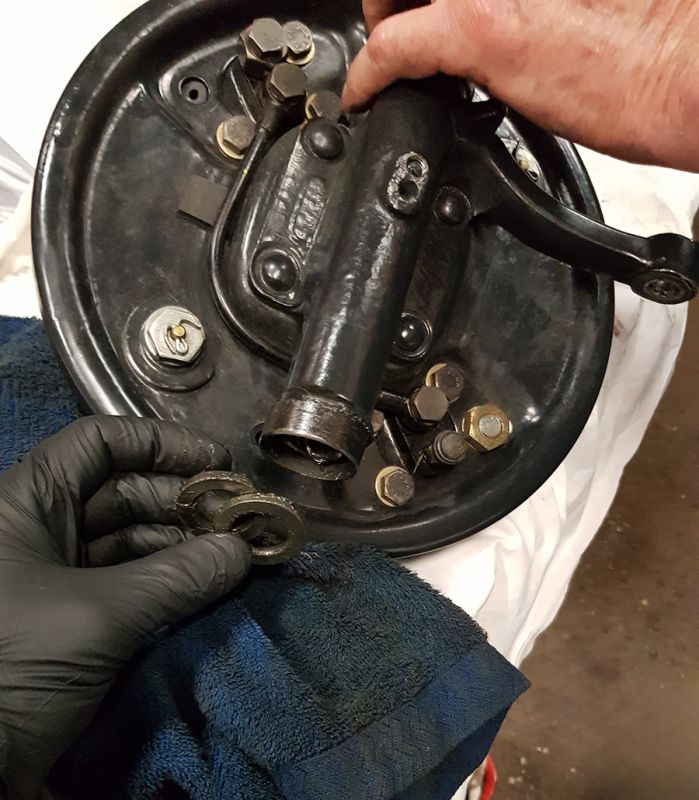
One of the new thrust washer’s recesses for the guide pin in the anchor plate was wrong (2nd picture in gallery below) That was fixed with a file. With all parts dry, I used shims so that I got the prescribed axial play of 0,05-0,10mm with the correct torque (3rd picture). There’s no torque specified for the Ponton but in the Technical Data Manual from 1966 90Nm is given for the same type of construction. It took a couple of tries with different shims until I got it right. When that was set, with the cone kept dry but the washers etc lightly greased, the steering knuckles were aligned with 1,5m long and perfectly straight steel pipes.

Aligning the king pin and the steering knuckle support with the help of perfectly straight steel pipes
I also double checked the radial play for the threaded pin for lower wishbone and the threaded bushing for the upper wishbone (4th picture).
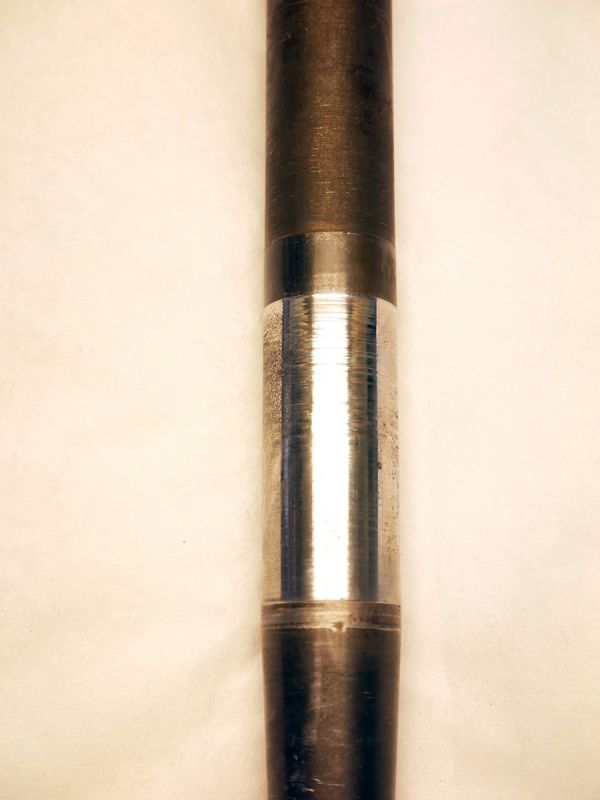
I had to polish the shaft of the excentric pins at the top wishbones to have them turn freely inside their corresponding threaded bushings (5th picture). The excentric pins’ nuts were tightened with 45Nm, i.e. as for a standard M10 nut since no specification could be found. Ensure that you can adjust the camber and caster easily.
I also fixed an issue I had with the right side’s lower wishbone’s “ears”. Somehow, sometimes they must have been bent and the distance between them was too large, 5,5mm, making it difficult to get the threaded pin in place correctly. I set the distance to 5,4mm as I had on the left side with which I had no problems (last picture in gallery shows the left ear that didn’t need adjustment…).
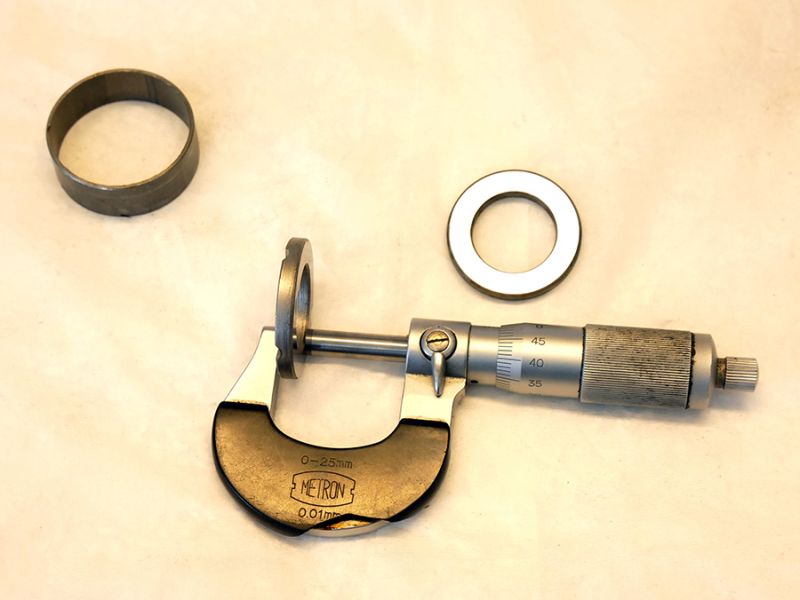
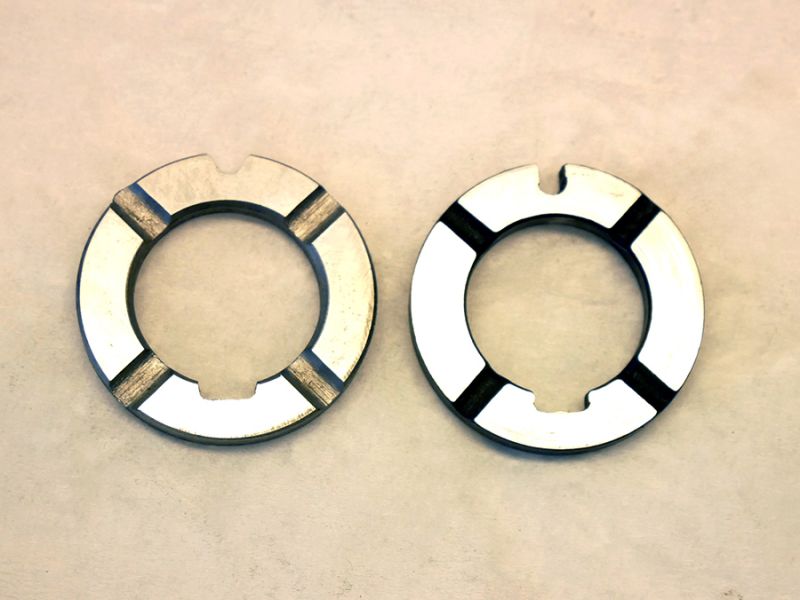


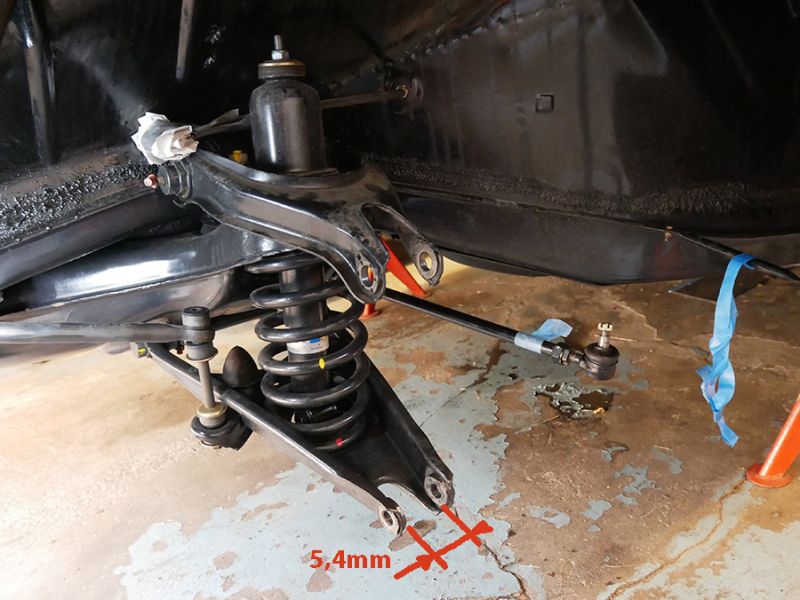
When it comes to the specified torque for the nut for the threaded pin in the lower wishbone, we can again use later models’ Data Manual, for the same type of construction; 180Nm. If the threaded pin’s hole for the cotter pin doesn’t line up with the nut’s hole when the correct torque is achieved, you can either use a shims or remove some material from the nut. I had to use a 0,2mm shims on the left side.
Second attempt

Second, and final, attempt to align the wheels
We now had no issues setting the correct camber and caster, without damaging the sealing rings (which I had replaced with new ones after the first shop’s attempts).


The hook wrench for the adjusting washer is a standard tool, bought from the local hardware store. No MB Ponton tool needed. The second picture shows the result of the first shop’s attempt to set the caster.


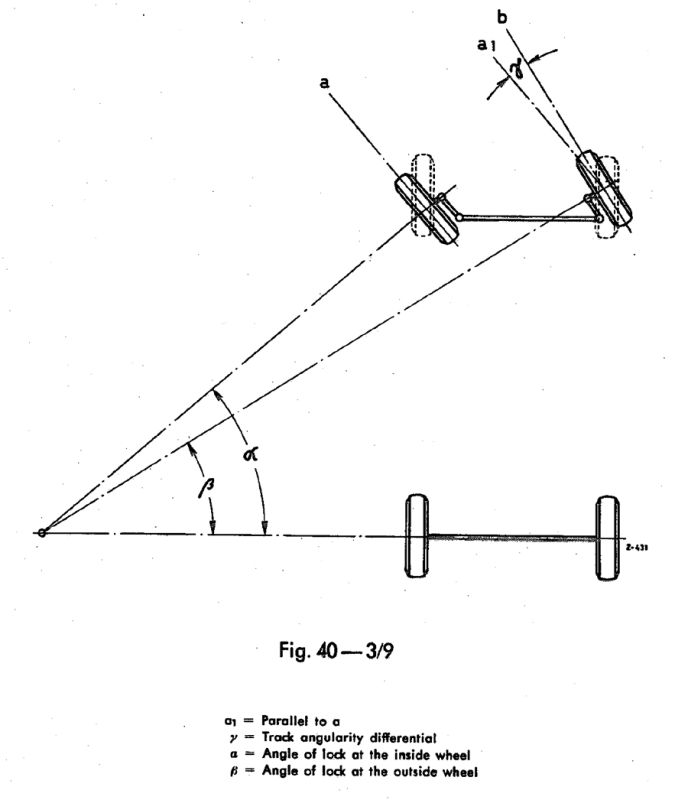
All other values were double-checked including the toe-in and track angularity differential. The interesting thing is that this was the first time the mechanic, even though he had been in the alignment business for a long time and the shop also housed a famous MB classic restorer, had set anything else than toe in, and to some extent camber.